
The Candido Range: 50D, 200T, 400D and 800T Explained
By Martin Brown, Liquid Light Lab
Candido brings Kodak VISION3 motion-picture colour negative film into still photography in a practical 35mm format. My work with Candido is to carry the stock properly after exposure: ECN-2 development, C-41 cross-processing when requested, high-dynamic-range scanning, density-led colour rendering and final files prepared for serious photographic use.
This is the same VISION3 family trusted at the highest end of cinema production, including Christopher Nolan’s The Odyssey. It is rather good, to say the least.
VISION3 is premium cinema camera negative stock brought to you by Candido. Kodak designed it for production environments where exposure, colour, density and continuity have to survive a moving scene. A stills photographer can make one frame and move on. A cinematographer needs a stock that can follow a performer through changing exposure levels without the image structure falling apart.
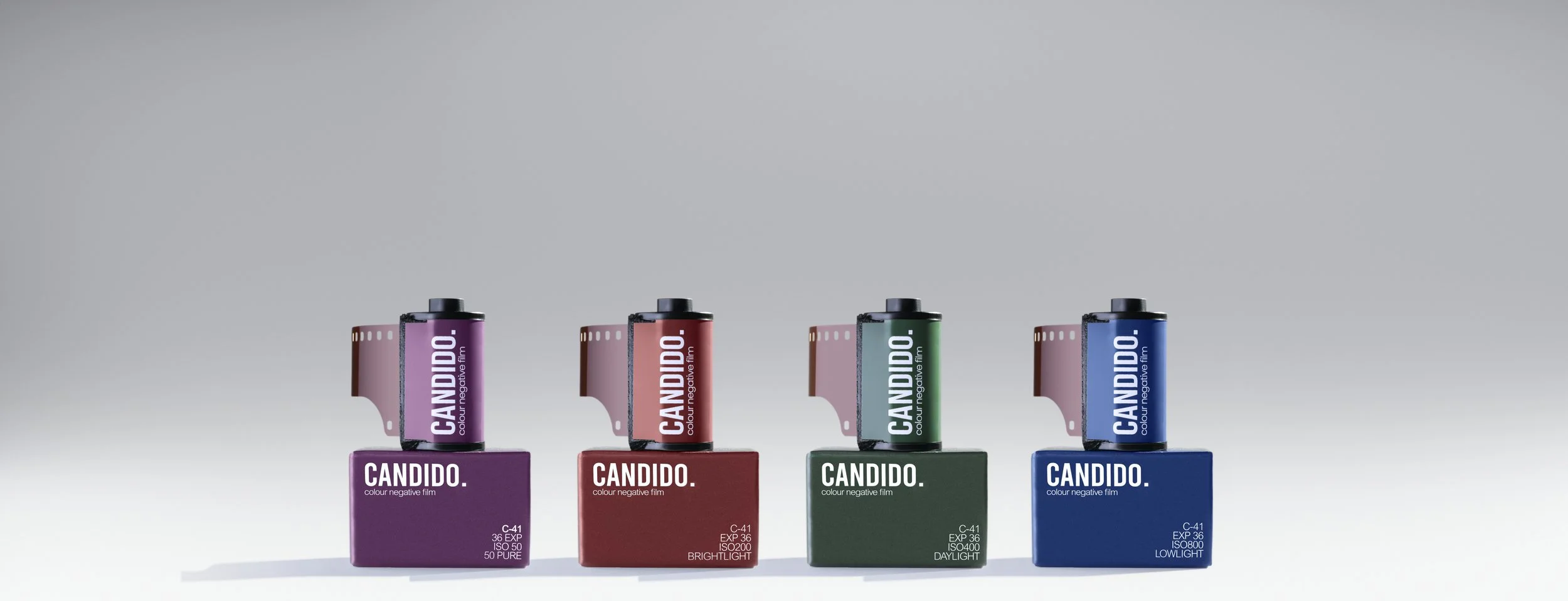
Candido's four VISION3-based film stocks, from ISO 50 daylight to ISO 800 tungsten. Built on Kodak's professional cinema film technology, the same family trusted by major motion picture productions for its exceptional exposure latitude, colour consistency and ability to retain detail across changing lighting conditions.
Picture an actor moving through a room in one continuous take. The shot begins near a practical lamp, crosses into a darker part of the set, picks up a stronger motivated key, then settles into a close-up. Skin, costume, background, highlights and lower values all need to remain coherent. The camera does not stop for a new meter reading each time the actor crosses another level of exposure. The film has to carry the scene.
VISION3 was built for that pressure. Portraits, events, interiors, practical sources, daylight exteriors and location-controlled lighting all benefit from a negative with latitude, restrained contrast, highlight control and usable shadow information. The value sits in the way the stock holds colour, density and tonal structure.
Liquid Light Lab in the UK exists to preserve those qualities after the roll has been exposed.
Kodak VISION3 AHU: what has changed
AHU means Anti-Halation Undercoat. Kodak’s VISION3 AHU structure replaces the traditional remjet-backed construction with an anti-halation undercoat and a process-surviving back-side layer designed for cleaner handling, anti-static performance and scratch resistance.
Kodak states that AHU brings no change to the product’s sensitometry and requires no workflow adjustment in processing, scanning or printing. In practical terms, VISION3 AHU remains VISION3. The emulsion identity remains intact. The exposure references remain Kodak’s published references. The native process remains ECN-2.
Kodak has done a tremendous job with this film. AHU improves control around the emulsion while retaining the performance that made VISION3 valuable in the first place. The film is cleaner to handle, cleaner to scan and more precise in the way it controls halation.
Older remjet-removed stills rolls often made halation the most visible trait. Lamps, neon, signage, headlights and hard practical sources could bloom around the brightest parts of the frame. Many photographers liked the effect, and in the stills re-roll market it became a visual shorthand for cinema film.
AHU changes the emphasis. Bright-source halation is more tightly controlled, so the viewer reads the actual negative more clearly: exposure, density, colour separation, highlight structure and shadow strength. A well-exposed frame looks refined. A thin exposure has fewer visual distractions around the highlights and more dependence on the lower values actually recorded onto the film. Kodak has not made VISION3 less cinematic. It has made the stock cleaner, more disciplined and better suited to photographers who care about craft.
The VISION3 range in Candido form
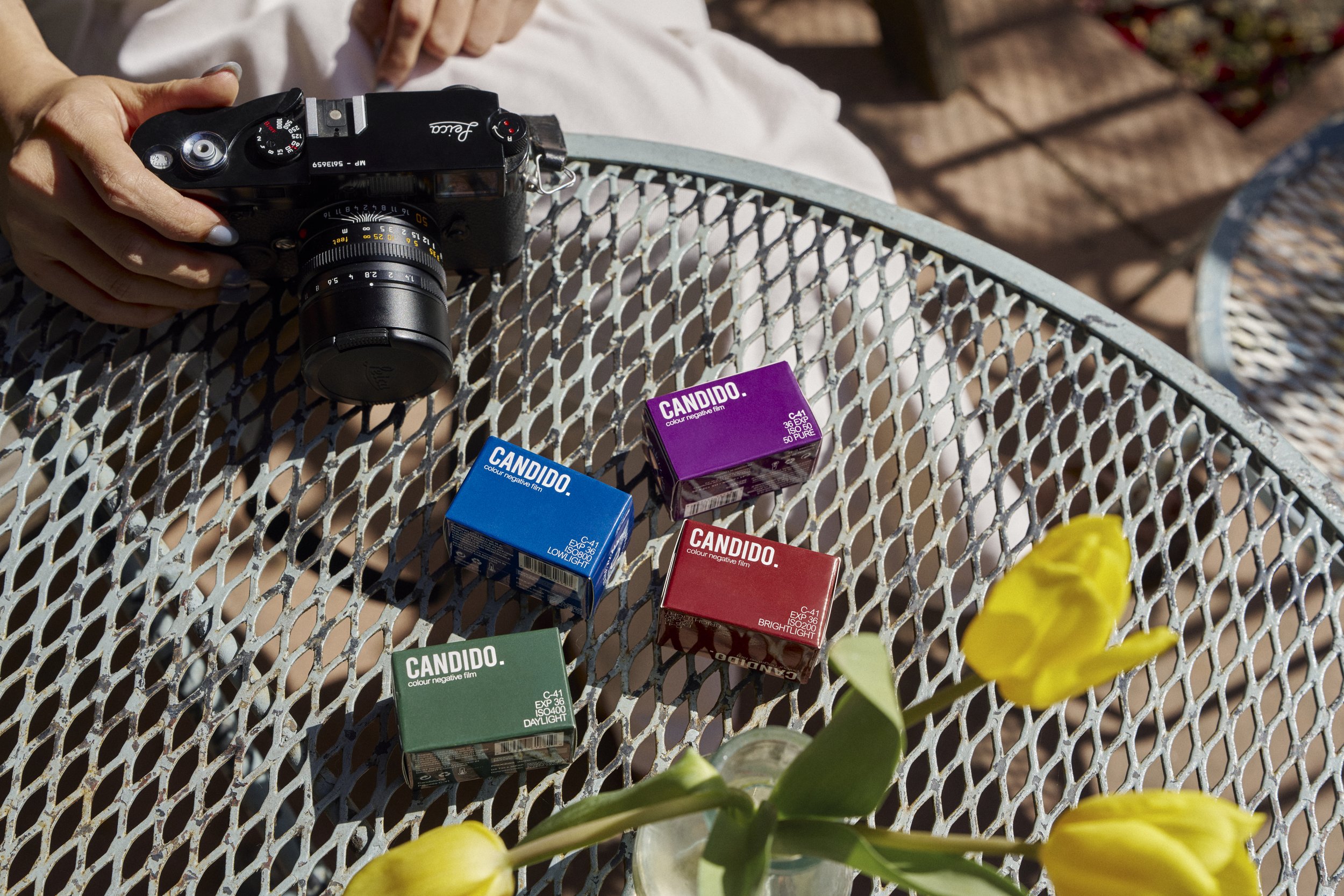
All four Candido cinema films bring you the very best performance of modern cinema.
Candido 50D, 200T, 400D and 800T give stills photographers practical routes into different parts of the VISION3 family.
50D is the clean daylight stock. It suits controlled daylight work, architectural colour, open exterior scenes, portraits with precise exposure and situations where fine structure matters. It gives the most disciplined grain profile in the range and rewards careful metering.
200T is the lower-speed tungsten-balanced option. It sits in a useful space for interiors, practical sources, controlled mixed environments and work where 500T is not needed. Compared with the faster tungsten stock, it gives a cleaner structure while keeping the tungsten balance that makes the VISION3 T stocks so useful around motivated practicals.
400D is Candido’s stills-facing route into the VISION3 250D base. 250D is one of the most useful daylight-balanced motion-picture stocks because it combines flexibility with strong colour control and highlight behaviour. Candido’s 400D index gives photographers a simple working rating, while the Kodak 250D base remains the technical foundation.
800T is Candido’s stills-facing route into the VISION3 500T base. 500T is the high-speed tungsten stock in the VISION3 range, with strong low-value handling for a colour negative film and excellent highlight tolerance. Candido’s 800T index gives photographers a practical high-speed shooting route, but the Kodak 500T base still defines the exposure reference, process route and density behaviour.
Across the range, VISION3 is valuable because the stocks were built for continuity, latitude and colour stability. They are not disposable effect films. They are professional camera negative stocks adapted into a stills workflow.
Candido exposure index and Kodak stock identity
Candido presents VISION3 through stills-facing exposure indexes. An exposure index is a working camera rating. It does not change the underlying Kodak stock.
Candido 50D is based on Kodak VISION3 50D.
Candido 200T is based on Kodak VISION3 200T.
Candido 400D is based on Kodak VISION3 250D.
Candido 800T is based on Kodak VISION3 500T.
The Candido name gives each roll a clear stills identity. The Kodak emulsion inside remains the technical foundation for exposure behaviour, processing and scanning.
Kodak publishes VISION3 500T as EI 500 under 3200K tungsten illumination, or EI 320 in daylight with an 85 filter. Kodak publishes VISION3 250D as EI 250 in daylight. Both are ECN-2 process films. The same native process principle applies across the VISION3 range, including 50D and 200T.
Candido 800T therefore means a Candido exposure index applied to a 500T base. Candido 400D means a Candido exposure index applied to a 250D base. Shooting 500T at 800 gives the film less exposure than Kodak’s 500-speed reference. Shooting 250D at 400 gives the film less exposure than Kodak’s 250-speed reference, defining the Candido look. Exposure index is a creative and practical shooting decision. Stock identity is a technical fact. Good lab work respects both.
When Candido film arrives at Liquid Light Lab, I process it according to the Kodak stock inside the canister, the exposure index used by the photographer and the development route selected for the order. A roll of Candido 800T exposed at 800, a roll exposed at 500 and a roll intended for push processing are different instructions. The same applies to Candido 400D exposed at 400 or at 250.
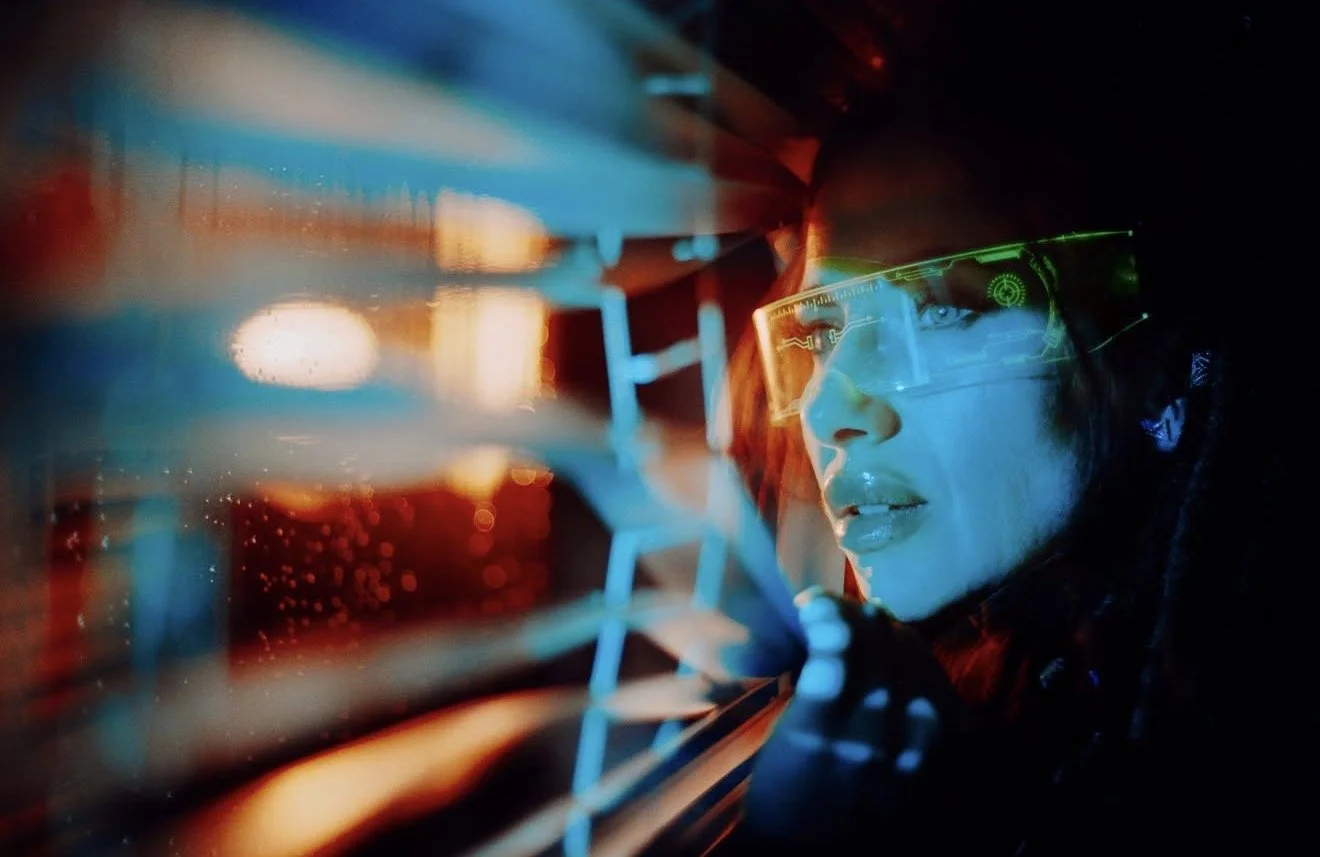
Candido 200T, shot at EI 100. Photograph by Candido Ambassador and Technical Partner Martin Brown, who can also be found on @liquidlightwhisperer and @theliquidlightlab
Why the true stock speed still matters
VISION3 has a reputation for latitude, and the reputation is earned. Kodak’s own technical material for 500T and 250D emphasises reduced grain in shadows and extended highlight latitude. Those strengths help explain why the stocks are so valuable in still photography.
Latitude still depends on recorded information. A negative cannot scan detail that was never exposed onto the film. Rating a stock faster than its native reference reduces exposure, and reduced exposure affects density. The high values may remain usable because VISION3 protects highlights extremely well, while the lower values lose strength first.
AHU makes the issue easier to see. Older, stronger halation around bright sources could draw attention away from thin exposure. A night street frame with lamps, signage and headlights could still look dramatic because the highlights were visually active. With AHU, halation is better controlled, so the underlying exposure is easier to judge. The film looks cleaner, and the negative has to carry more of the visual weight.
VISION3 500T is also not night vision. EI 500 is only one third of a stop faster than ISO 400. The stock is highly capable in controlled low-light work, tungsten environments and scenes with motivated sources, but it still needs exposure. Treating it as magic because the canister says 800T risks throwing away the shadow performance that makes the stock worth using.
Candido’s indexes can be used successfully. Shoot with awareness and give the lab the information needed to support the choice.
ECN-2 is the native route
Kodak VISION3 colour negative films are ECN-2 process films.
ECN-2 is the route I recommend when the aim is to preserve the stock’s intended colour, contrast, density and tonal behaviour. It respects the motion-picture design of the film and gives scanning a controlled foundation.
VISION3 AHU does not become ordinary C-41 stills film because the backing structure has changed. AHU improves the anti-halation and handling system around the emulsion. It does not change the emulsion into a different chemical process.
Liquid Light Lab develops Candido film in ECN-2 for photographers who want the native VISION3 route. The processing is paired with scanning and rendering built around the density of the developed negative. Not all labs can handle ECN-2 chemicals, and your own regional area may require some research before you find a lab that can help you.
C-41 is the cross process
C-41 as a chosen cross-process, and development is available at labs worldwide when a photographer wants a cross-processed rendering.
C-41 changes the behaviour of VISION3. Colour response, contrast and density can shift. Some work benefits from that route, especially when the photographer wants a more baked-in departure from the ECN-2 reference. The process choice should come from the intended result, not from confusion about what the film is.
ECN-2 is the native process. C-41 is the alternative rendering path.
Scanning and rendering: where the stock becomes the file
Development produces the processed negative. Scanning and rendering decide how much of the stock becomes usable in the final image.
VISION3 carries highlight structure, density transitions, shadow separation and colour relationships that need careful translation. A strong scan should read the information in the film rather than force it into a narrow look. Density matters here. Colour accuracy matters. Bit depth matters. The scan needs enough dynamic range to respect the stock.
Liquid Light Lab scans Candido film through a high-dynamic-range workflow, with 16-bit output and density-aware colour rendering. Files are prepared for editing, printing, publication and archiving. Reach out to your regional lab and speak to them. They’re your photographic partners, and best placed to help you get the most from your film.
My work as a professional photographer and at Liquid Light Lab comes from the same discipline: stock choice, lens behaviour, exposure, motivated lighting, development, scanning and final tonal control all belong to one chain. The camera body is only the work surface. The image is made by the full analogue system.
Candido film benefits from being carried through that system with control. Speak to your regional lab about their scanning capture process and if it meets Kodak’s 16bit capture process which you can read about here.
Sending Candido film for development & scanning
For the native VISION3 route, choose ECN-2, and for a deliberate cross-processed result, choose C-41. If the film was intentionally rated faster and you want development adjusted to support the exposure choice, select push processing when ordering.
Candido film is built from premium Kodak VISION3 stock. Kodak’s AHU structure makes the film cleaner, more controlled and better suited to serious stills workflows. This is a stock that rewards careful exposure, correct processing and high-quality scanning.
Martin Brown | Liquid Light Lab @theliquidlightlab
Liquid Light Whisperer @liquidlightwhisperer